The ultimate rooftop tent guide: Experience freedom on the car roof
A rooftop tent is more than just a place to sleep; it's your ticket to a world of spontaneity and adventure. Whether you're planning a weekend getaway to a remote lake or a months-long road trip across Europe, with a rooftop tent system, you always have your bed with you. This comprehensive guide tells you everything you need to know before deciding to buy a rooftop tent . We explore the differences between soft-sided and hard-sided rooftop tents , take a detailed look at top brands like Vickywood and Moby Mountain , and explain what really matters when testing a rooftop tent .
Why a rooftop tent? The camping revolution
The trend towards rooftop tents for cars remains strong. But why are more and more people opting for a rooftop tent concept instead of the classic ground tent or an expensive caravan?
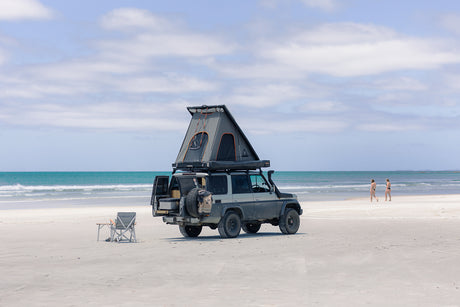
The answer lies in flexibility. A rooftop tent allows you to transform almost any vehicle into a camper. You don't need a large van; your station wagon, SUV, or rooftop tent pickup setup is perfectly sufficient.
The advantages at a glance:
-
Quick location change: Especially with a hard-shell roof tent , you're ready to leave in minutes.
-
Sleeping with a view: You sleep up high, away from the cold ground, safe from creepy crawlies and dampness.
-
Lower maintenance costs: Compared to a motorhome, you don't pay extra insurance or taxes for your "motorhome", as the tent is considered cargo.
-
Off-road capability: Wherever your car can go, your sleeping place can go too.
The big decision: hard-shell roof tent or folding tent?
If you're looking for rooftop tents , you'll quickly find that there are two main categories: hardshell tents and softshell tents. Both have their merits, but the choice depends heavily on your travel style.
1. The hardshell roof tent
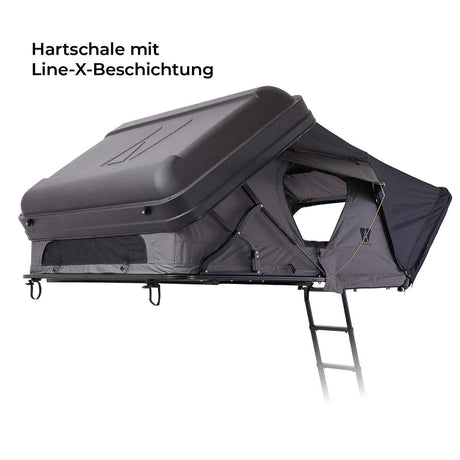
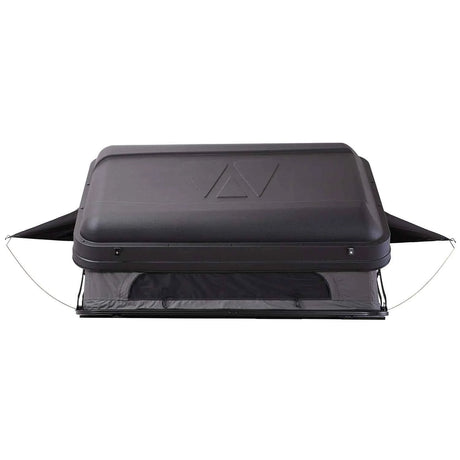
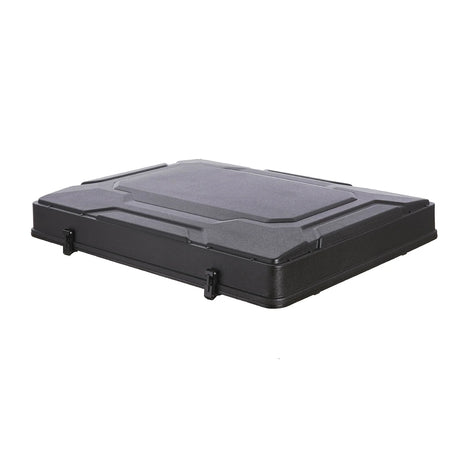
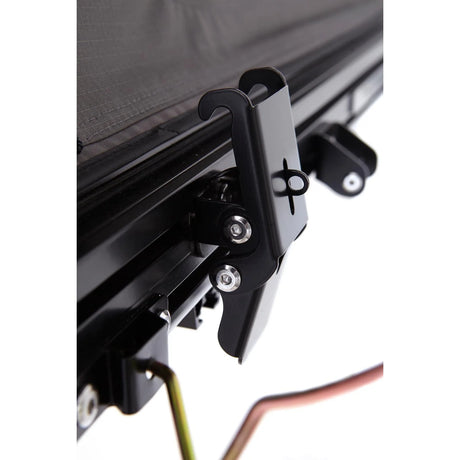
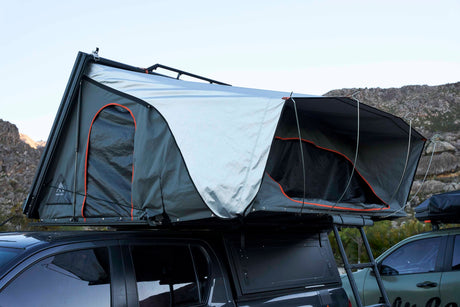
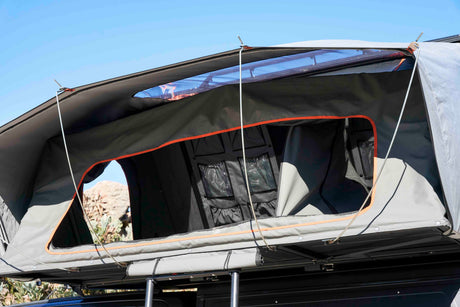
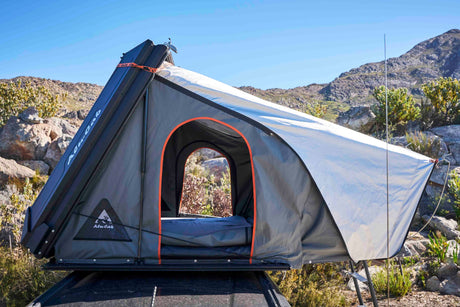
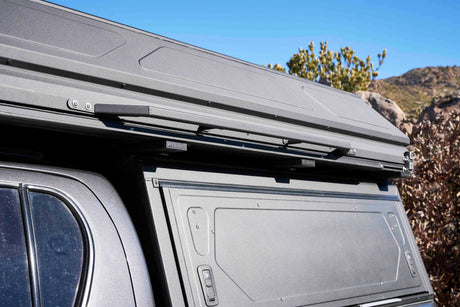
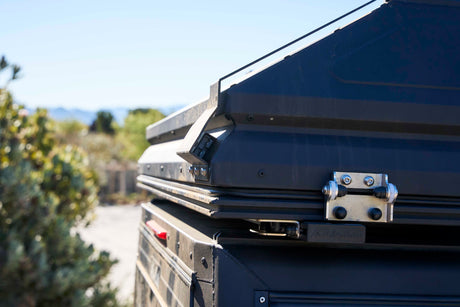
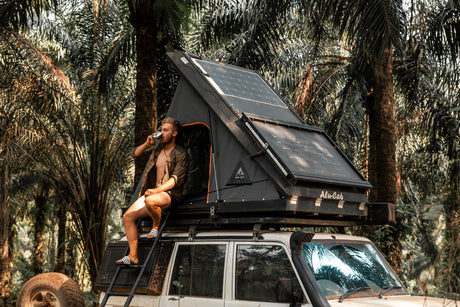
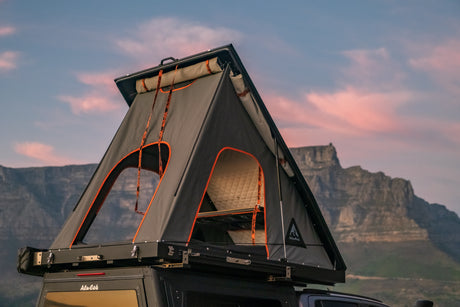
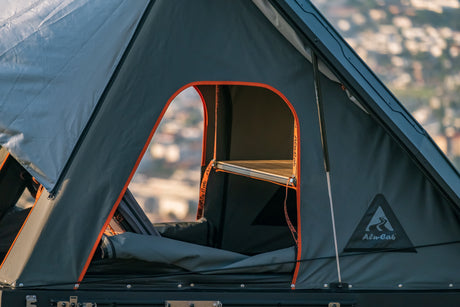
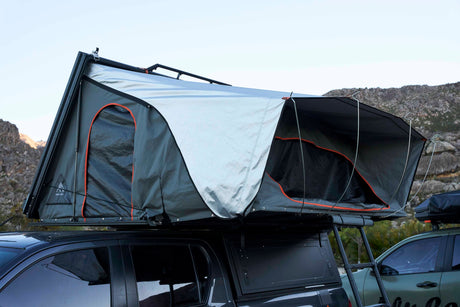
Those looking for a hard-shell roof tent or hard-shell roof tent usually prioritize speed and comfort. These models consist of a floor and a ceiling panel (usually made of fiberglass, ABS plastic, or aluminum).
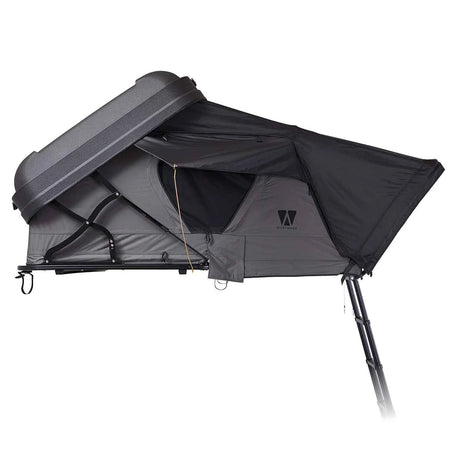
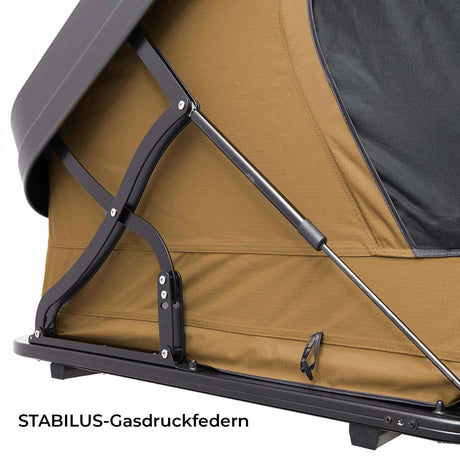
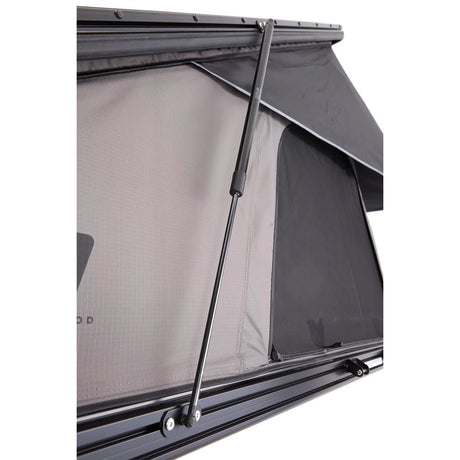
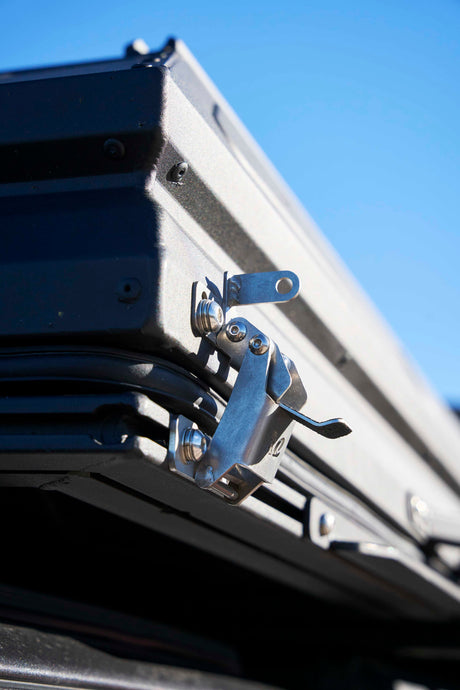
Setup: Open the latches, give the hard-shell roof tent a little push, and gas struts do the rest. The tent is often up in under 60 seconds.
Advantages:
-
Extremely fast setup: Ideal for travelers who change location every day (overlanding).
-
Aerodynamics: When closed, they are often flatter and more aerodynamic, which can reduce fuel consumption compared to bulky folding tents.
-
Weather resistance: The hard shell optimally protects the tent fabric from branches and rain during the journey.
Disadvantages:
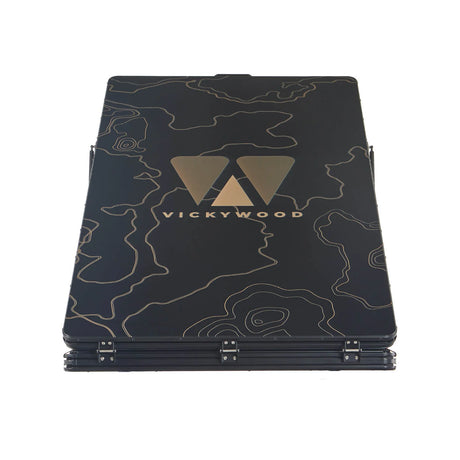
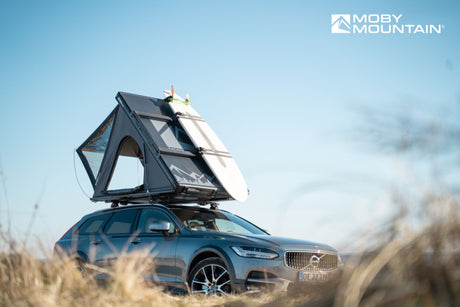
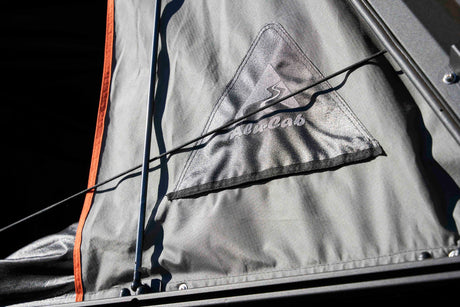
Classic examples of premium hardshell helmets are the models from Moby Mountain or Alu-Cab . Vickywood also now offers exciting hardshell options.
2. The folding tent (softcover)
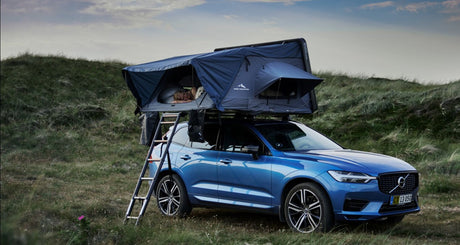
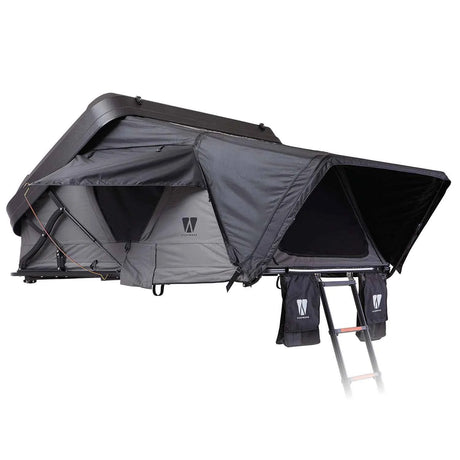
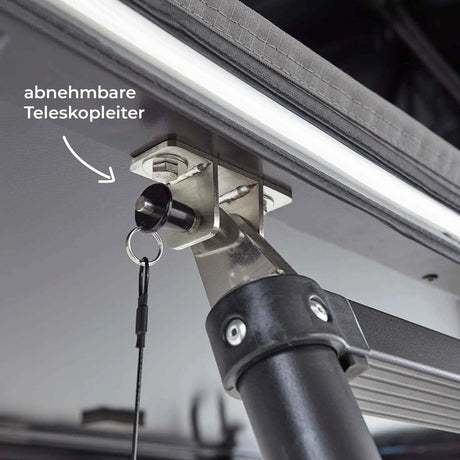
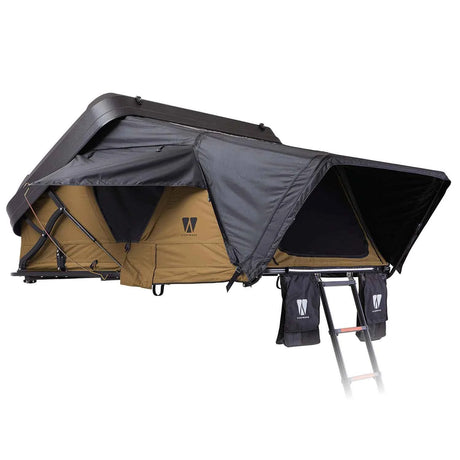
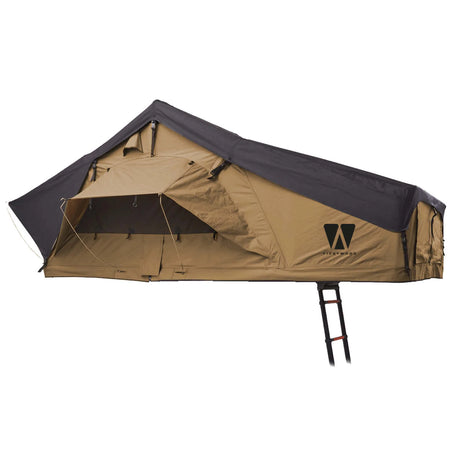
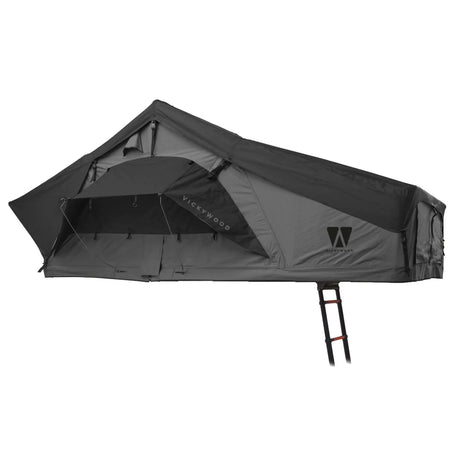
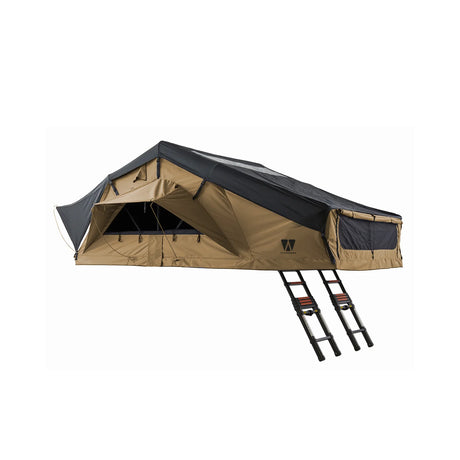
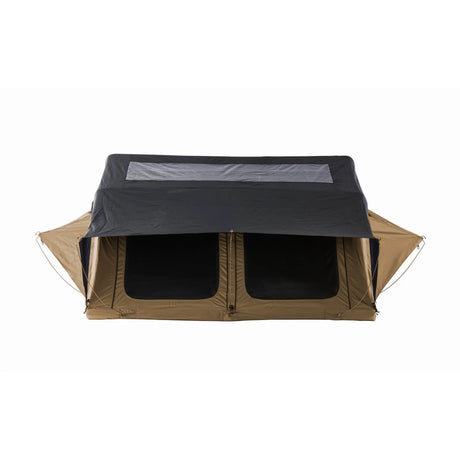
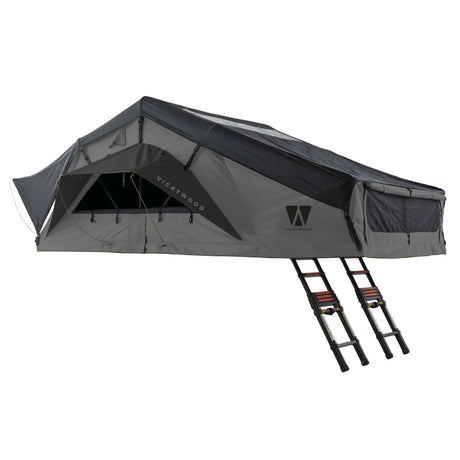
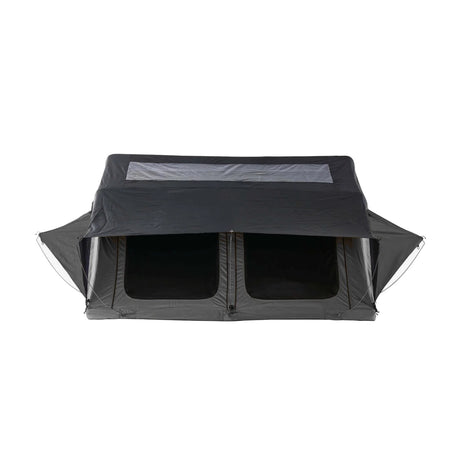
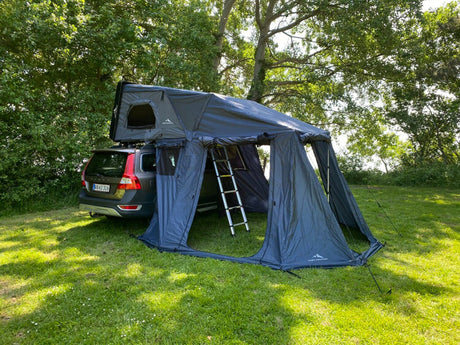
The classic folding roof tent works like a book. It is transported folded on the roof and doubles its surface area when unfolded. Part of the tent then extends beyond the side of the vehicle, supported by the ladder.
Advantages:
-
Huge sleeping area: A small pack size on the roof can become a huge roof tent for 4 people .
-
Sense of space: The tent shape often creates a cozy "cave" with plenty of headroom.
-
Weight: Softcover books are often (but not always) lighter than solid hard cases.
Disadvantages:
Brands in focus: Vickywood, Moby Mountain & Overland Experience
When searching for the right roof tent for your car, you inevitably come across certain names. The search volume for Vickywood and Moby Mountain roof tents, in particular, demonstrates the popularity of these brands. Let's take a closer look at these market leaders.
Vickywood: The modern all-rounder
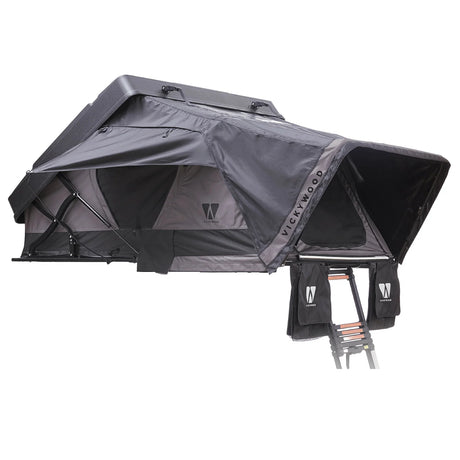
The Vickywood brand has become one of the top players in recent years. Many users even type variations like "Vicky Wood roof tent" or "Vickywood roof tent" into their search because they specifically want this brand.
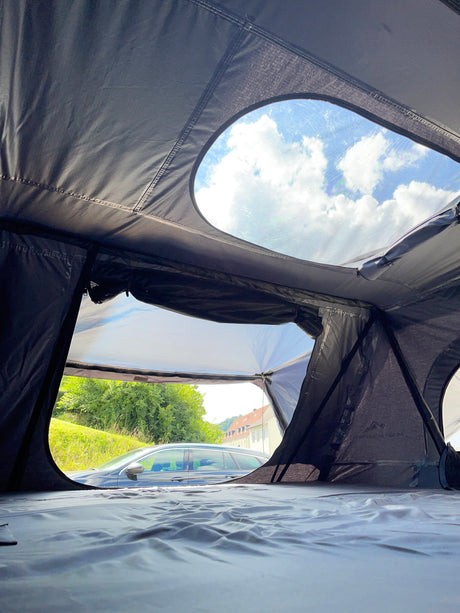
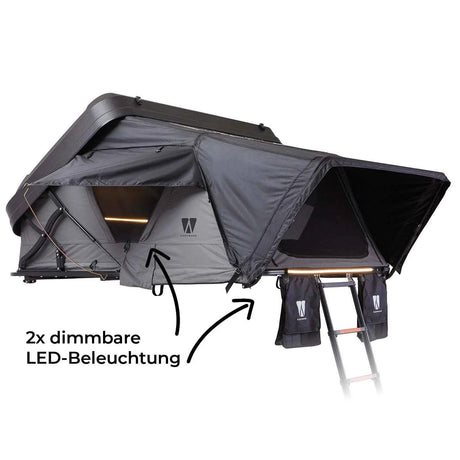
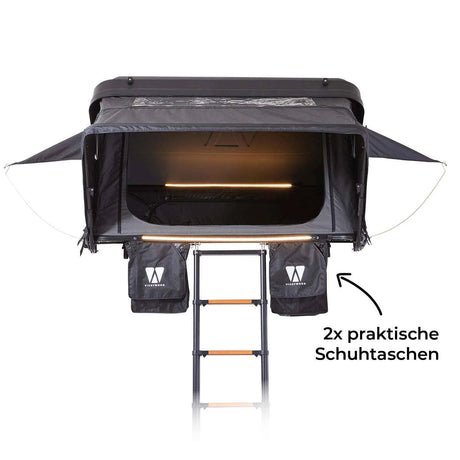
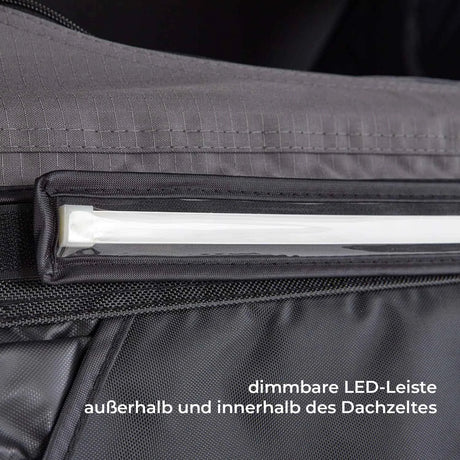
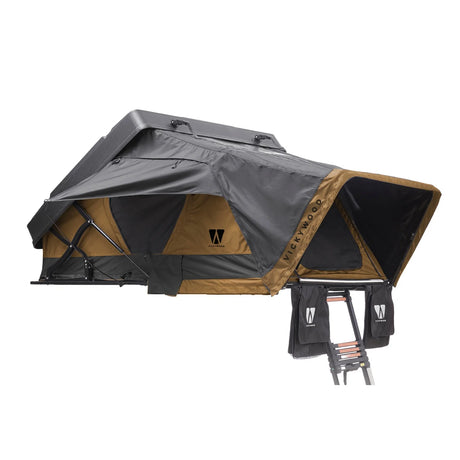
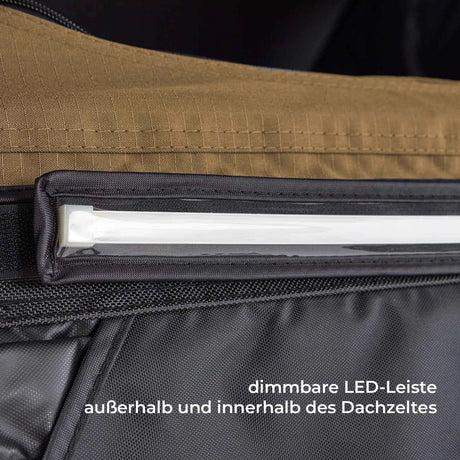
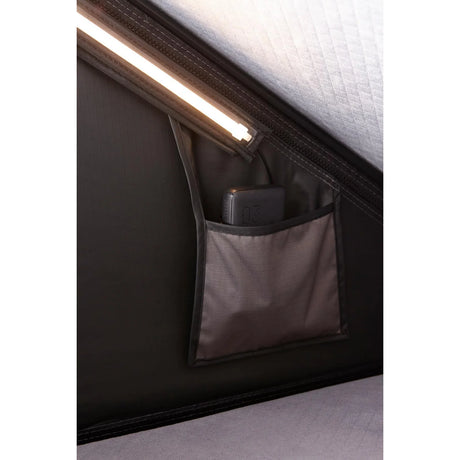
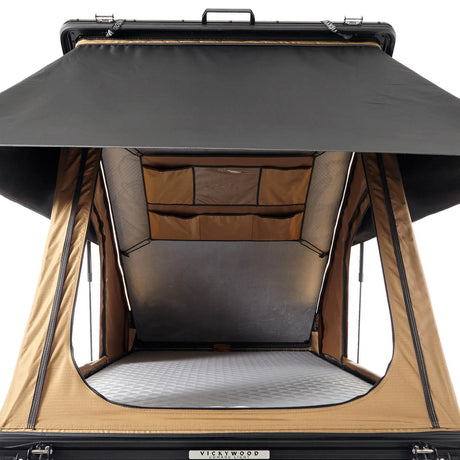
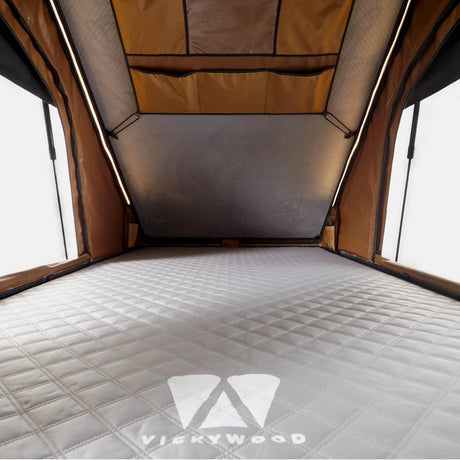
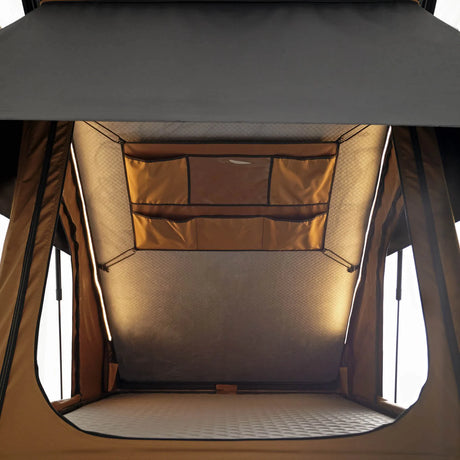
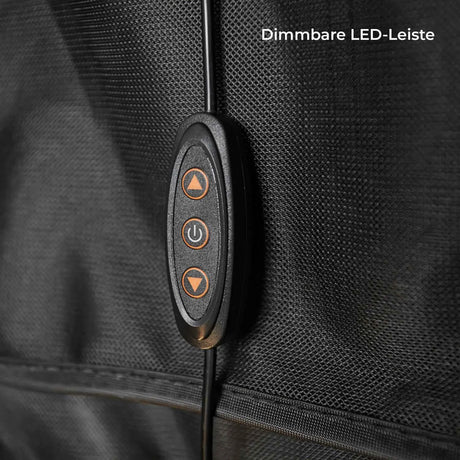
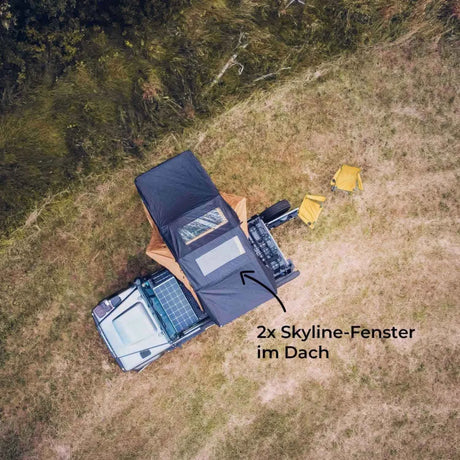
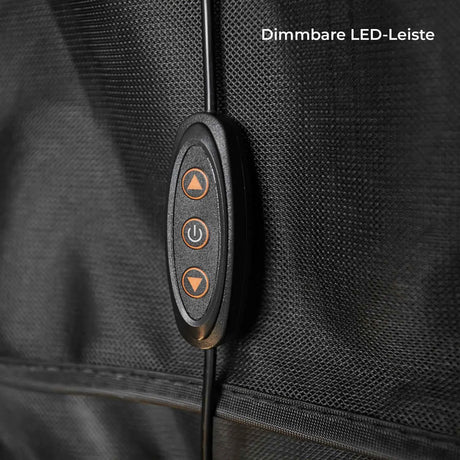
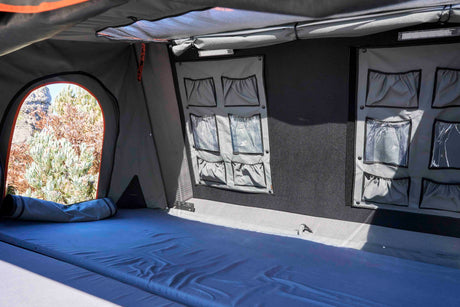
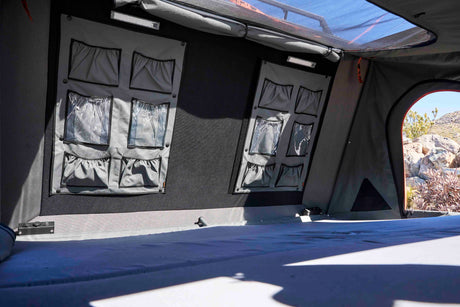
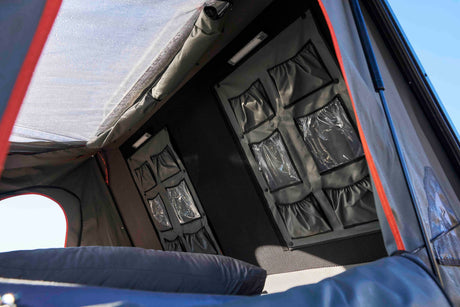
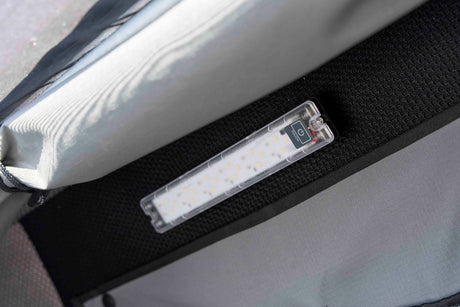
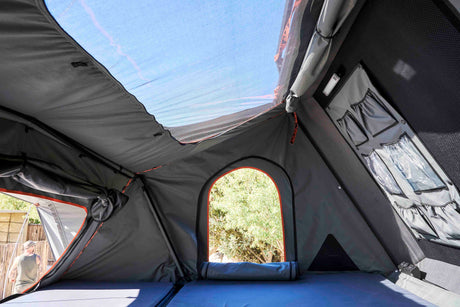
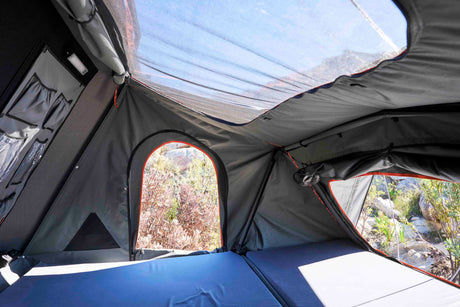
What makes Vickywood special? Vickywood combines lifestyle with functionality. They are known for bright interiors, large windows (sky windows) and innovative features such as LED lighting in the tent.
-
Variety: From the classic folding tent to the Vickywood hybrid roof tent, they cover everything.
-
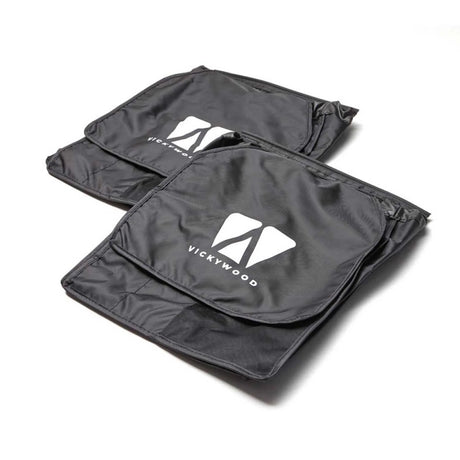
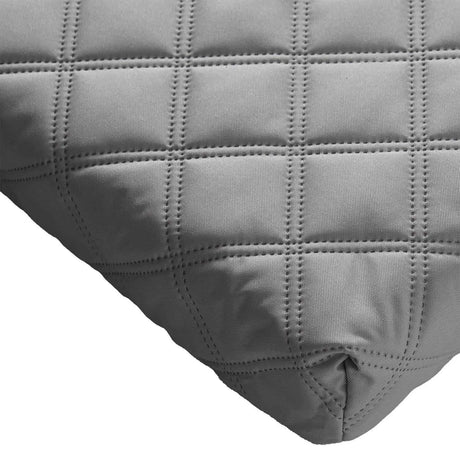
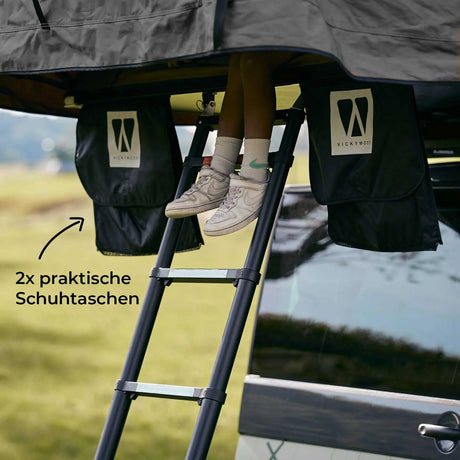
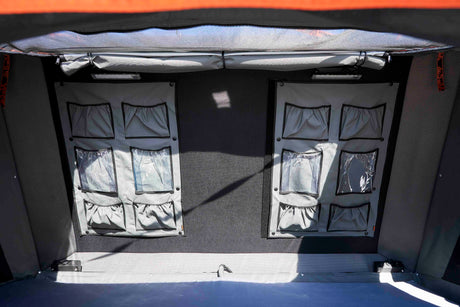
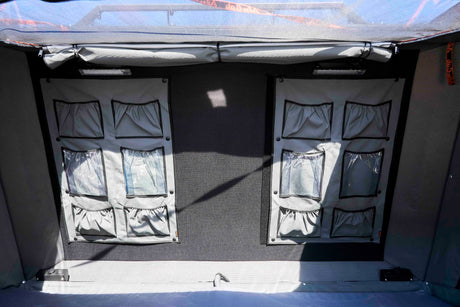
Value for money: They often offer very good accessories (mattress pad, shoe bags) included in the delivery.
Moby Mountain: The top class of hard-shell suitcases
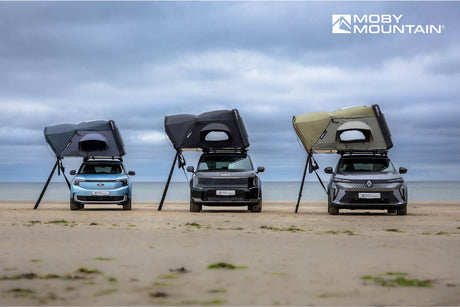
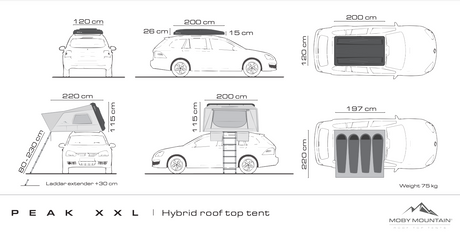
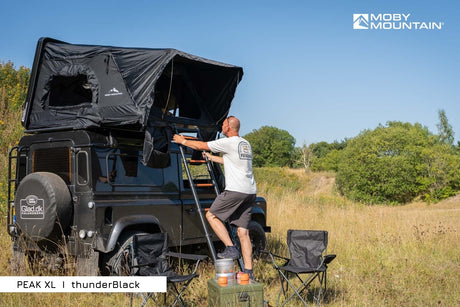
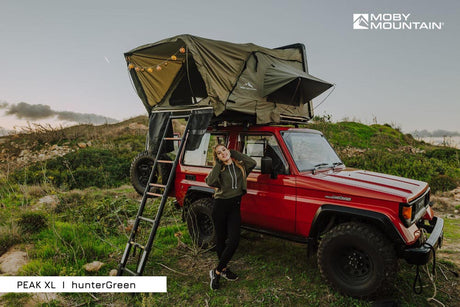
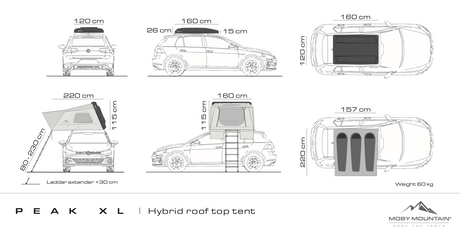
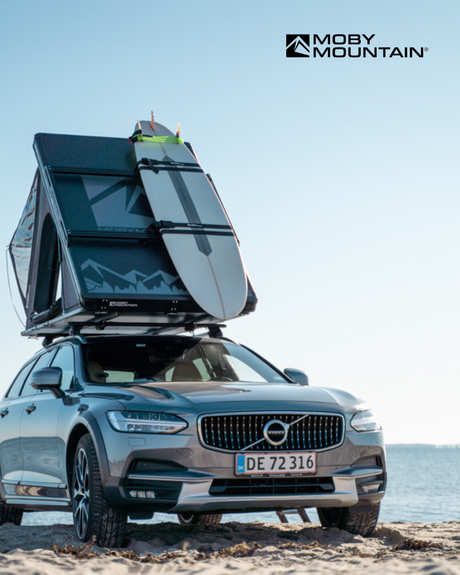
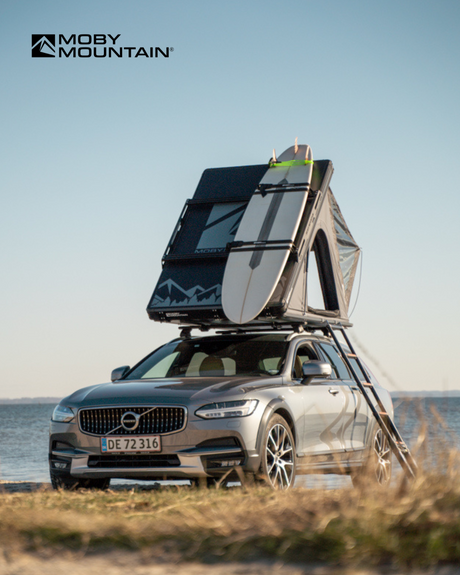
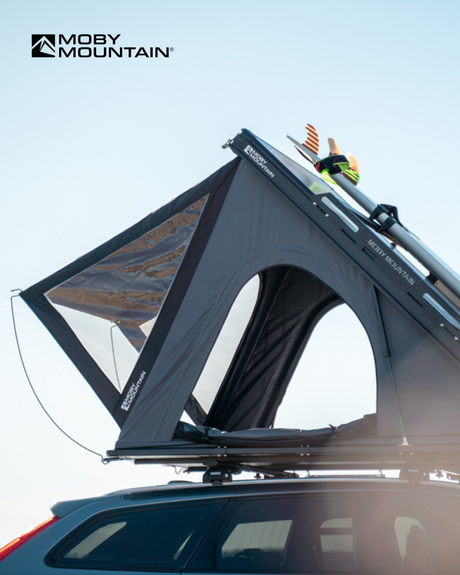
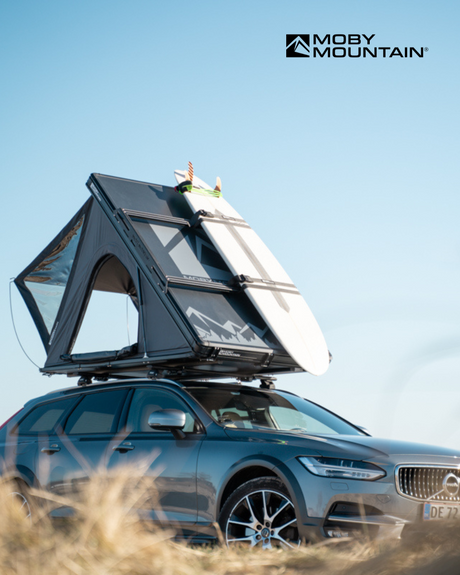
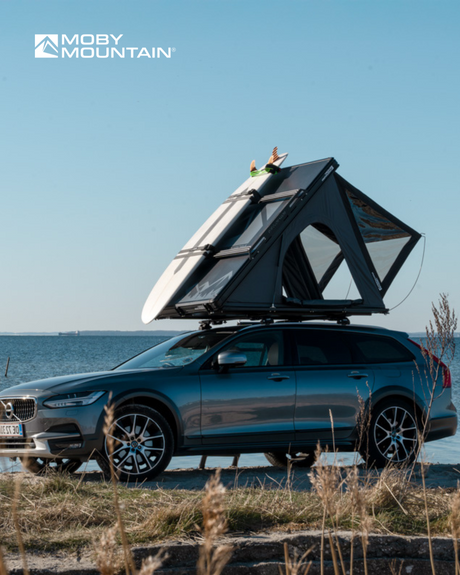
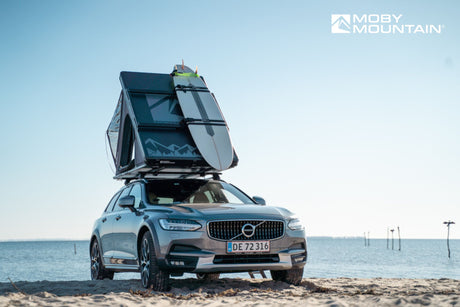
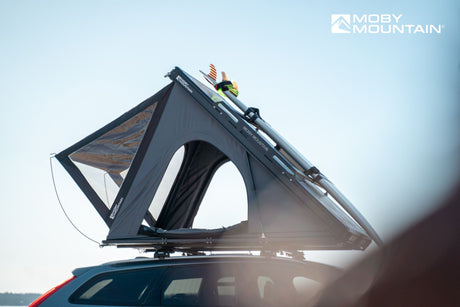
If you're specifically looking for the Moby Mountain Peak XXL or Moby Mountain Peak XL , you probably already know what you want: space and speed. The Peak series from Moby Mountain are hybrids of hardshell and pop-up tents. They open upwards on one side, but thanks to a clever mechanism, they offer more space than traditional pop-up tents.
-
Moby Mountain Peak XL: Perfect for couples or small families.
-
Moby Mountain Peak XXL: A space miracle among hard-shell tents, which can also be suitable for up to 4 people, without the complexity of a pure folding tent.
Overland Experience: Robust for off-roaders
An Overland Experience roof tent often represents pragmatism and off-road capability. The German brand builds very robust roof tents. Those looking to buy a roof tent while keeping a solid budget often end up considering Overland Experience.
Rooftop tent for 4 people: The solution for families
Traveling with the whole family? No problem. A rooftop tent for four people is one of the fastest-growing segments. But be careful: "four people" is a flexible term.
Things to consider when buying Familine roof tents:
-
Sleeping area width: For 4 people (2 adults, 2 children) the width should be at least 180 cm, preferably 200 cm or 220 cm.
-
Roof load: A large roof tent for 4 people often weighs between 70 and 90 kg. Be sure to check the dynamic roof load capacity of your vehicle (more on this later).
-
Awning: With four people, it gets cramped in the tent when it rains. A rooftop tent with an awning is almost essential here to keep rubber boots, jackets, and toys dry.
Models like the large folding tent from Vickywood or the Moby Mountain Peak XXL (as a hard-shell hybrid) are leading the way here.
Rooftop tent test and test winner: What's the verdict?
Many customers search for roof tent reviews or specifically for the best hard-shell roof tent before buying. This is understandable, as no one wants to waste €2,000 to €4,000. However, be careful: there are few independent institutes that test roof tent systems as scientifically as the ADAC does for child car seats. Many "tests" on the internet are actually just comparisons of data sheets.
When conducting a genuine rooftop tent test, pay attention to:
-
Waterproofing: Was the tent actually exposed to rain? Pay attention to the water column rating of the tent fabric (3000mm is a good guideline).
-
Wind stability: A car roof tent is exposed at a height of 2 meters. Does it rattle? Will the frame hold?
-
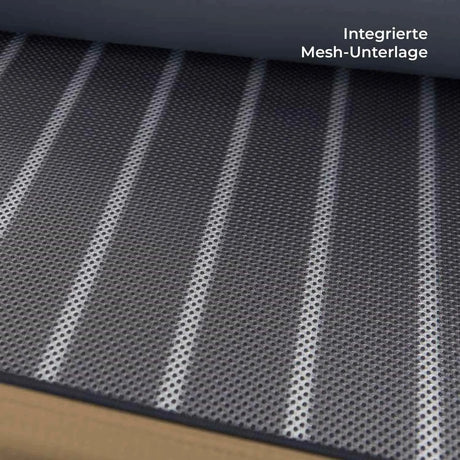
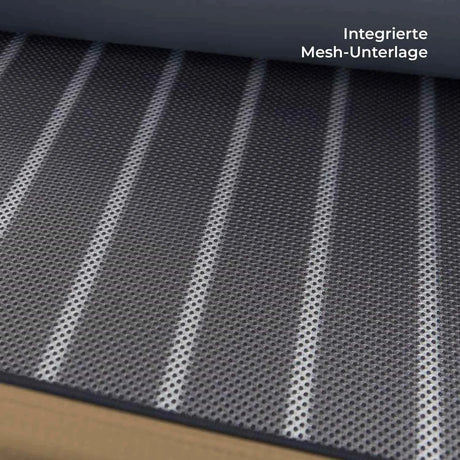
Condensation management: Good tents have forced ventilation and mattress pads (mesh) to prevent mold.
A hard-shell roof tent that wins a magazine's test might not be the best choice for your car. If you drive a small car, the heavier, top-rated tent might not even be mountable.
New vs. Used: Is a used roof tent worth it?
The search volume for used roof tents exists for a reason (even if it's lower than for new ones). Roof tents are durable products.
Arguments for "used roof tent":
Risks when buying used goods:
-
Mildew stains: If the previous owner packed the tent wet and stored it for weeks, the mold is almost impossible to remove.
-
Mechanics: On a hard-shell roof tent, the gas pressure dampers can weaken over time.
-
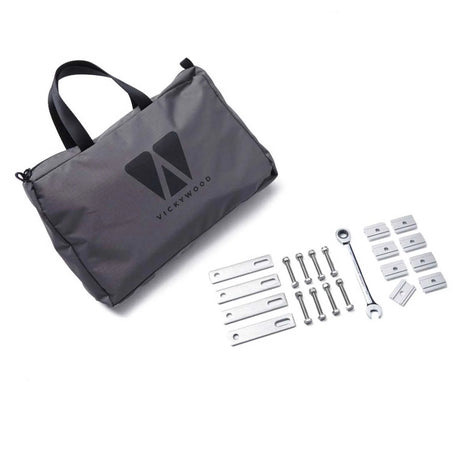
Assembly: Are the T-nuts or brackets for attaching to the roof rack missing? Ordering replacements can be a hassle.
If you want to buy a rooftop tent and want to be on the safe side, we recommend buying a new one, if only for the warranty and the assurance of receiving a hygienically perfect product.
Accessories that make the difference: Rooftop tent with awning and more
A basic rooftop tent is good, but an equipped one is better. A rooftop tent with an awning is a real game-changer.
The awning (annex)
With folding tents, the vestibule is usually zipped under the overhanging part. It extends all the way to the ground.
-
Privacy: Finally, you can change clothes while standing up, without the whole campsite watching.
-
Weather: You can climb into the tent dry using the ladder.
-
Sleeping arrangements: If necessary, another person or the dog can even sleep in the vestibule (on a camp bed).
Awnings
Many people combine their rooftop tent setup on their pickup or SUV with a 270-degree awning (e.g., from Alu-Cab or Vickywood ). This creates a huge covered living space around the vehicle.
Thermal ceiling / Interior insulation
If you want to use your rooftop tent in autumn or winter, you'll need a thermal liner. It acts like a second wall and keeps the heat inside.
The right vehicle: From small cars to rooftop tent pickups
"Will it fit on my car?" is the most frequent question. Basically: Yes, almost any car can carry a rooftop tent .
The issue of roof load
There's often confusion here. Vehicle registration documents often state a roof load of, for example, 75 kg. This is the dynamic roof load – the weight that can act on the roof while driving, braking, and cornering. A hard-shell roof tent often weighs between 60 and 80 kg. So, this usually just barely suffices. When stationary (static roof load), the car can withstand many times that amount. Therefore, if two people are lying in the tent, the roof won't collapse because the forces are distributed through the car's pillars.
Rooftop tent pickup solutions
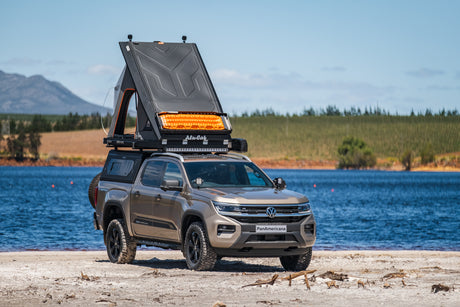
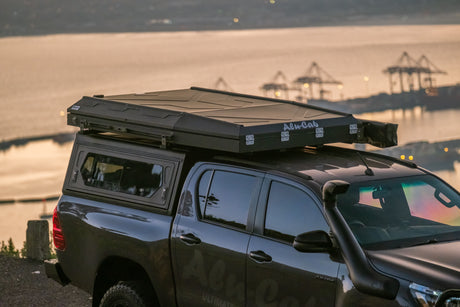
A rooftop tent setup for a pickup truck is especially cool. Here, the tent is often mounted not on the cab, but on a hardtop or a "bed rack" (cargo bed carrier).
-
Advantage: The center of gravity remains lower. The tent does not extend beyond the driver's cab -> better aerodynamics.
-
Brands: Alu-Cab and Horntools roof tent models are very well represented here, as they are robust enough for off-road use on the flatbed.
Materials science: What makes a good tent roof for a car?
When comparing roof tents , you will come across terms like "poly-cotton" or "Oxford nylon".
-
Poly-Cotton (blended fabric): Most high-quality tents (e.g. Vickywood roof tent , Horntools ) use a blended fabric of cotton and polyester.
-
Advantage: It is breathable. The indoor climate is significantly better, and it rustles less in the wind.
-
Disadvantage: It is heavier and dries more slowly than pure synthetic fiber.
-
Polyester / Nylon (synthetic fiber): Often used in cheaper tents or extremely lightweight versions.
-
Advantage: Very light, dries extremely quickly.
-
Disadvantage: Less breathable (risk of condensation), louder in windy conditions.
The "water column" rating is important, but not everything. Seams must be taped (sealed), and the zippers (often YKK) must be of good quality so that you can enjoy your hard-shell roof tent or folding tent for a long time.
Step by step: Buying a roof tent – How do I proceed?
You've decided you want to buy a rooftop tent . Here's your roadmap:
-
Check your vehicle: What is your dynamic roof load capacity? What type of roof rack (crossbars) can you mount? (Important: Roof racks must be clamped or fixed; magnetic mounts are not suitable!).
-
Determine the number of people: Do you need a roof tent for 4 people or is a 140cm tent sufficient for two?
-
Choose type: hard-shell roof tent for speed or folding tent for space?
-
Choose a brand: Should it be a stylish Vickywood , a fast Moby Mountain , or a robust Horntools roof tent ?
-
Order & Assemble: Get help with the initial assembly or visit a specialist retailer (like us at Overlandingshop) who will show you how to securely attach the tent.
Frequently Asked Questions (FAQ) about roof tents
Is a hard-shell roof tent that's a test winner always the best choice? No. A test winner in a magazine often evaluates criteria that may be irrelevant to you. If the test winner weighs 90 kg, but your car only has a 75 kg roof load capacity, it's not suitable. It's better to rely on expert advice than on seals of approval.
Can I install a roof tent by myself? No. A roof tent car system weighs between 50 and 90 kg. You need at least one other person or a ceiling lift in the garage to lift it onto the car.
How fast can I drive with a rooftop tent? Most manufacturers (whether Vickywood , Moby Mountain , or others) recommend a maximum speed of 120 km/h. The handling is affected by the high center of gravity and the increased wind resistance.
Does fuel consumption increase? Yes. With an aerodynamic hard-shell roof tent, you can expect an increase of approximately 0.5 to 1.5 liters per 100 km. With a rectangular folding tent, it can be 1.5 to 3 liters more per 100 km.
What if the roof tent gets wet? That's no problem, the fabrics are waterproof. However, you shouldn't leave the tent closed and wet for days (risk of mold). At the next opportunity: unfold it and let it dry.
Detailed look at: Vickywood roof tent models
Since the search volume for Vickywood and Vickywood roof tent is very high, it's worth taking a closer look at their portfolio, which you can find in our shop.
-
Big Willow: A classic folding tent with a covered entrance. Especially popular as a rooftop tent for 4 people (Big Willow 180 or 220).
-
Mighty Oak: A hybrid tent. It looks like a hard shell, but it unfolds. It combines the robust shell with the spacious feel of a pop-up tent.
-
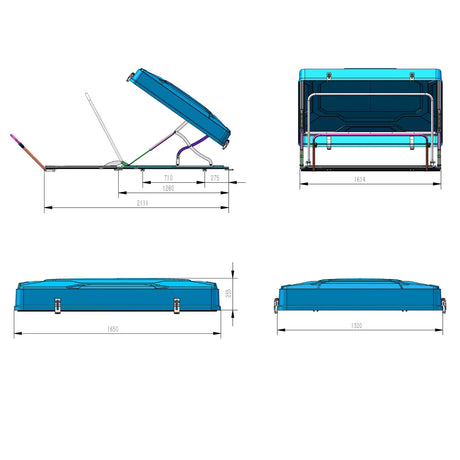
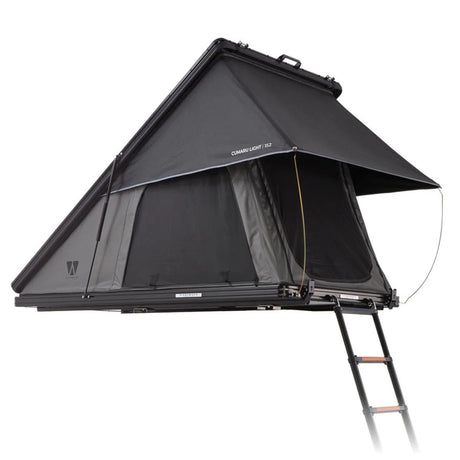
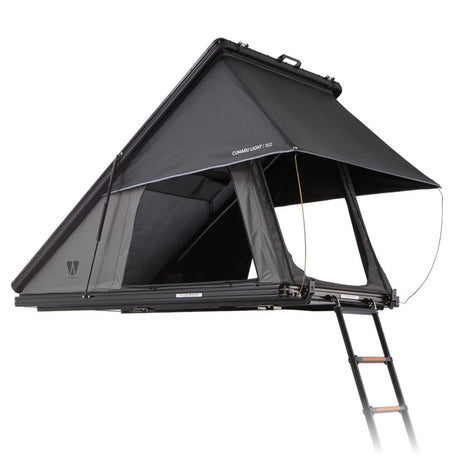
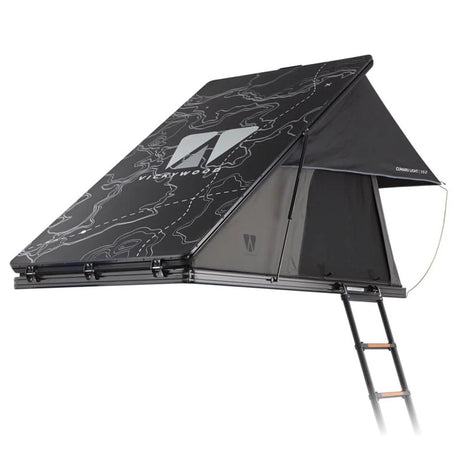
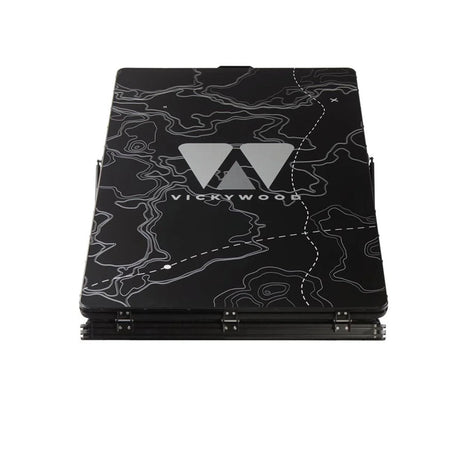
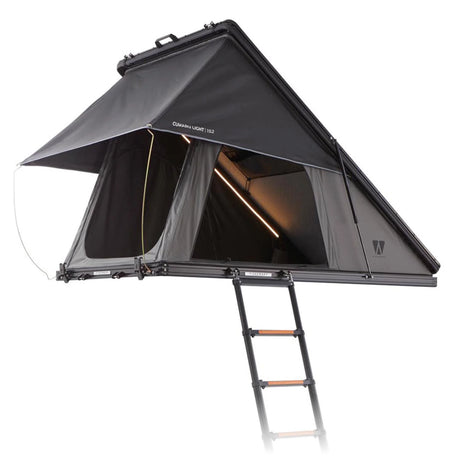
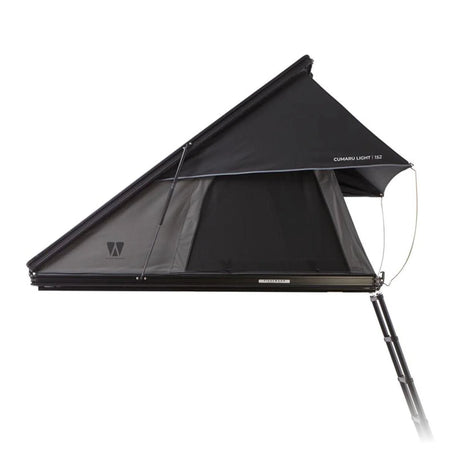
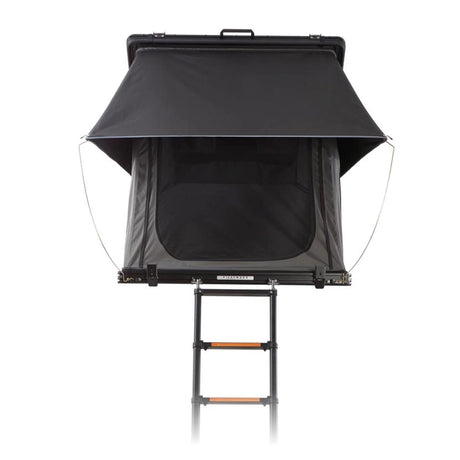
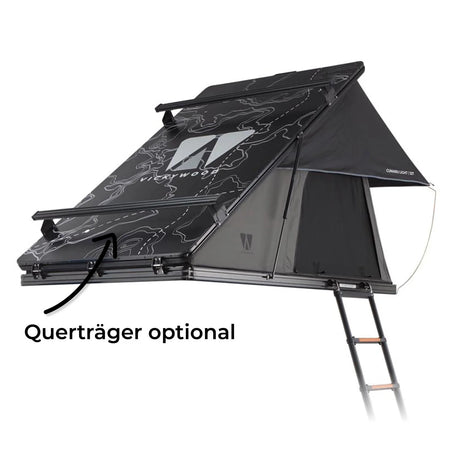
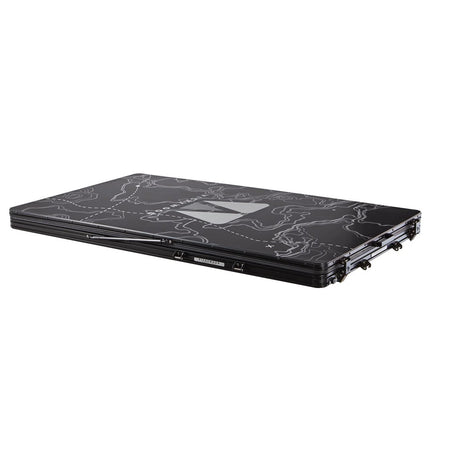
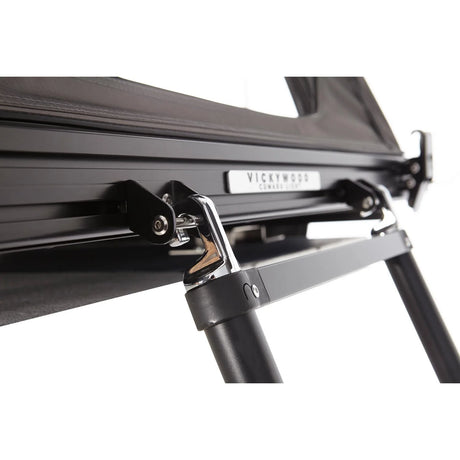
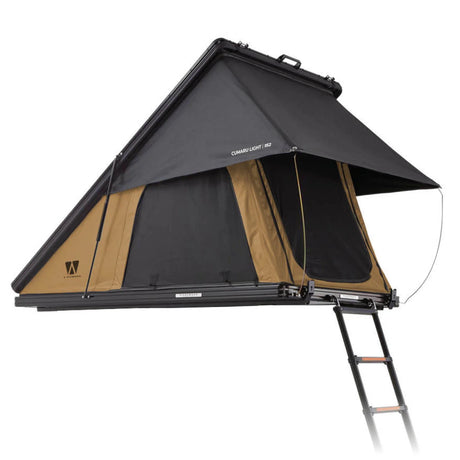
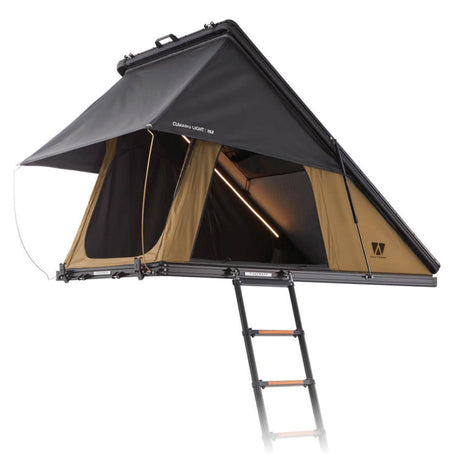
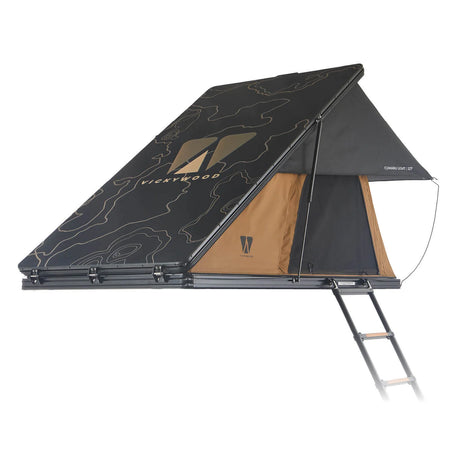
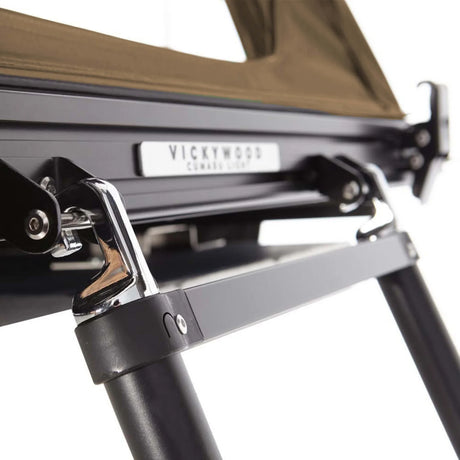
Cumaru: The robust hard-shell roof tent made of aluminum by Vickywood. Extremely flat, extremely stable, ideal for off-roaders who also want to mount solar panels on the tent.
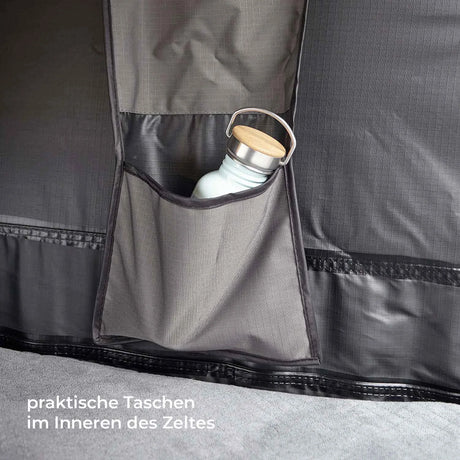
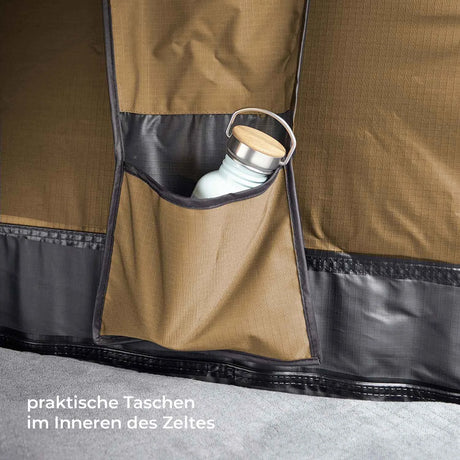
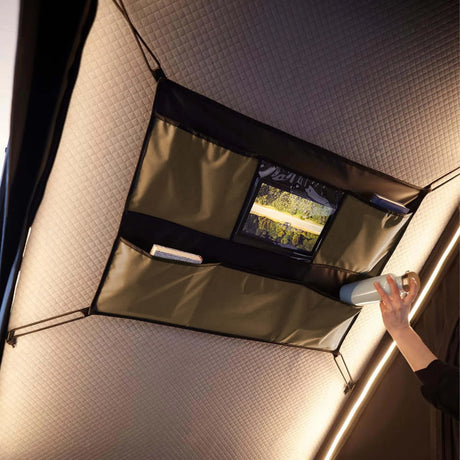
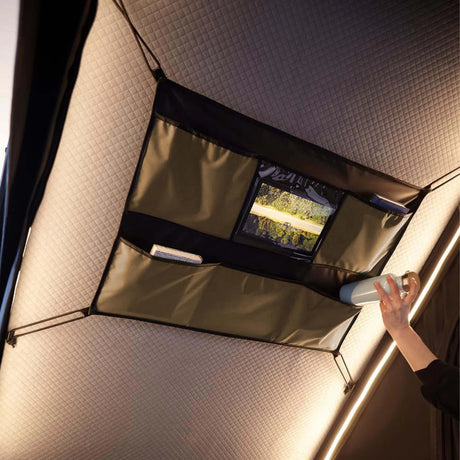
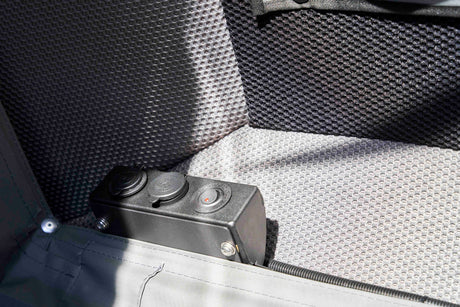
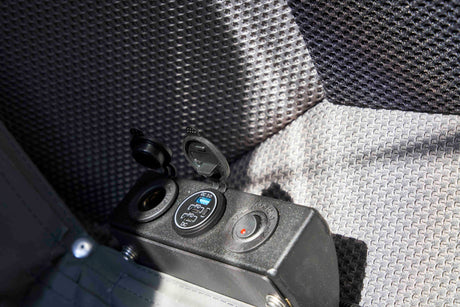
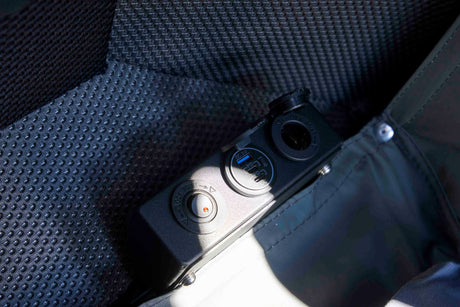
Vickywood is particularly distinguished by its attention to detail. Small pockets for power banks, USB-powered LED strips, and very fine mesh to keep mosquitoes out make all the difference in everyday camping.
Detailed look at: Moby Mountain
The Moby Mountain Peak XL and Peak XXL models are currently revolutionizing the rooftop tent market. What makes Moby Mountain special is its design. The hard shell doesn't look like a simple roof box, but rather boasts a dynamic, almost futuristic design. The setup mechanism is patented and incredibly easy. While you're still sorting poles with some folding tents, with the Moby Mountain you're already in your sleeping bag. The Moby Mountain Peak XXL is particularly appealing to anyone who previously thought hard-shell tents were too small for families. It makes optimal use of the available width.
Assembly tips: How to keep the tent roof securely in place on your car
Whether you're using a car roof tent or a roof tent mounted on a pickup truck , the connection to the vehicle is vital. You need base carriers (roof racks) that run perpendicular to the direction of travel.
-
Spacing: The distance between the crossbeams should ideally be between 70cm and 90cm to ensure that the weight of the tent is evenly distributed.
-
Overhang: The tent should not extend too far beyond the supports at the front and back to avoid vibrations.
-
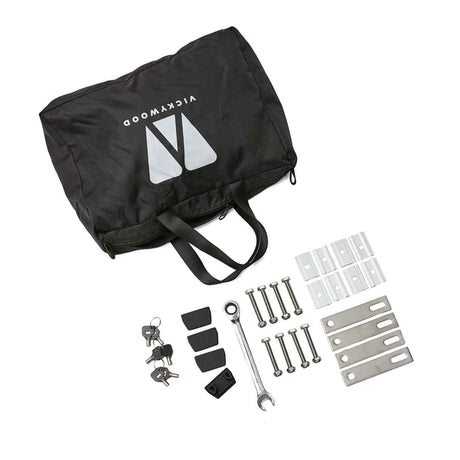
Theft: Use special security nuts to ensure that your expensive roof tent purchase wasn't in vain and to make it difficult for thieves.
The Overlanding lifestyle
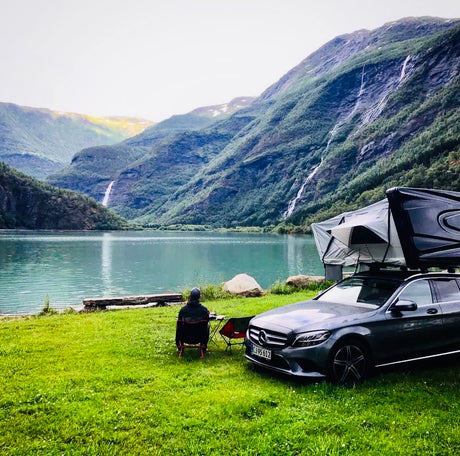
Owning a rooftop tent changes the way you travel. You no longer search for hotels. You search for the most beautiful view. You stop at the edge of forests (always observe local laws regarding wild camping!), on farms, or at designated trekking sites. A rooftop tent brings you closer to nature without sacrificing the comfort of a real mattress. It's the link between minimalist camping and a luxurious motorhome.
Maintenance and care of your roof tent
To ensure your hard-shell roof tent or soft cover lasts a long time, it needs some care.
-
Waterproofing: You should re-waterproof the tent fabric every 1-2 years to ensure that water continues to bead off well.
-
Polishing hard shells: Fiberglass shells (like boats) can become dull over time due to UV radiation. Polishing them once a year keeps them shiny and durable.
-
Ventilation: The most important thing with any rooftop tent – ventilate well after every trip to avoid mildew stains.
Conclusion: Which roof tent is right for you?
The selection of roof tents at Overlandingshop is large, and the decision is individual.
-
Are you looking for maximum space for your family while keeping an eye on your budget? -> Take a look at a large folding tent (softcover), perhaps a 4-person rooftop tent from Vickywood .
-
Do you want to be somewhere different every day, hate the setup process, and have the budget? -> Go for a hard-shell roof tent (e.g., Moby Mountain or Alu-Cab).
-
Do you drive a pickup truck and want to go off-road? -> A rooftop tent pickup setup from Horntools or Alu-Cab is for you.
-
Is comfort and an anteroom important to you? -> Look for a roof tent with an awning .
Don't be dazzled by mere buzzwords like "roof tent hard shell test winner" . The best tent is the one that fits your car, fits your budget, and puts a smile on your face at night.
At Overlandingshop, we're happy to help you find the perfect tent. Whether you're looking for a used rooftop tent (which we rarely stock, as we focus on the quality of new products) or want to configure the latest Vickywood rooftop tent – we're your go-to partner.
Start your adventure now. Find your rooftop tent and make the world your home.
Extended analysis: Aerodynamics and driving behavior with a roof tent
One aspect often underestimated when buying a roof tent is its impact on the vehicle. A roof tent setup raises the vehicle's center of gravity. This causes the car to lean more in curves. Those with a hard-shell roof tent often notice this less than with the taller package of a folding tent, but the effect is still there. Modern vehicles with ESP usually handle this well, but drivers should be aware: you're now driving a camper van.
The noise level also changes. A Moby Mountain Peak XL , due to its streamlined shape, is often quieter than a boxy folding tent. Wind noise becomes noticeable at speeds above approximately 100 km/h. Many manufacturers offer wind deflectors that are mounted under the roof rack to direct the airflow over the roof tent . This not only saves nerves but also fuel.
Winter camping in a rooftop tent?
Is it possible? Yes! More and more people are using their car roof tents year-round. Brands like Vickywood offer special thermal liners. But hard-shell roof tents also have advantages: The rigid shell on top (and often underneath) insulates better than fabric alone. Important for winter camping:
-
Ventilation: A 3D mesh underlay beneath the mattress is essential, otherwise the condensation will freeze solid under the mattress.
-
Heating: There are special auxiliary heaters (diesel heaters in boxes) that direct warm air into the roof tent via a hose. This ensures that even in sub-zero temperatures, the roof tent will be comfortably warm for four people .
The history of the rooftop tent
Did you know that rooftop tents aren't a new invention? The first designs appeared in Western Europe as early as the 1930s. However, they only became truly popular later, thanks to expeditions in Africa and Australia. There, people wanted to sleep safely away from lions, snakes, and crocodiles – and the car rooftop tent was the solution. Brands like Alu-Cab originate directly from South Africa and incorporate this decades-long experience into their designs. Today, rooftop tents are no longer just for expeditions, but are equally suitable for family holidays on the Baltic Sea. But this DNA of freedom and robustness is still present in every Horntools rooftop tent and every Moby Mountain model.
Legal information: Where am I allowed to park my rooftop tent?
A sensitive issue. Is it permissible to simply sleep anywhere in a rooftop tent ? In Germany, the rule is: "Restoring fitness to drive" (a single overnight stay) is often tolerated, unless explicitly prohibited. However, camping behavior (setting up a table and chairs, pitching a rooftop tent with an awning ) is forbidden in parking lots. The situation is different in Scandinavia (the "right to roam"), but this often only applies to hikers with tents, not necessarily to motorized rooftop tent campers. Check apps like "Park4Night" or use official campsites before your trip. The advantage: With a hard-shell rooftop tent , you're so compact that you can often park in areas that are closed to large motorhomes.
Summary of the top search terms and their meaning for you
We've used many terms in this text that you might have googled. Here's a brief explanation:
-
Buying a roof tent: The first step. Don't just compare prices, but also service and spare parts availability.
-
Car roof tent / car roof tent: synonyms for freedom. Don't be confused, they mean the same thing.
-
Vickywood: A design- and feature-oriented brand for the modern camper.
-
Hardshell roof tent: The premium solution for frequent drivers.
-
Used roof tent: An option for thrifty people with DIY skills.
-
Roof tent test: A guide, but not a law.
-
Roof tent with awning: The living space extension for bad weather.
We hope this guide has helped you navigate the jungle of rooftop tents . Whether you end up choosing a Moby Mountain Peak XXL , a compact Vickywood , or a robust Horntools , the most important thing is to get out there and explore your surroundings. Adventure awaits right on your car roof.
Browse through our categories, use the filter functions, and find the rooftop tent that will change your life. If you have any questions about rooftop tents for pickups , roof loads, or installation, we're always here to help. Your Overlandingshop Team.